

Career Differentiation; working with your sustainable energy
How you can use your unique energetic design to position yourself as a specialist in preperation for the incoming 'pixelated' workforce

Lately it seems everyone has a prediction about what the future of work will look like. It’s no surprise to anyone how drastically things are set to change and transform in our workplaces over the next 3-5 years. From our work schedules, recruitment, flexibility and work cultures- everything will be changed under the influence of automation, the growing gig economy and the economic implosion we are currently witnessing.
We are on the edge of the old and the new and it feels uncertain. So much so that many of us feel frozen mid-step, watching frantically to try and anticipate where will be the safest direction to aim our next move. So how do we position ourselves in a way that offers a sustainable way forward in our work? How can we connect with something more than just a traditional career plan; something that considers our personal nature and offers deeper self-awareness and growth, not just professionally but also in our personal lives?
The answer is career differentiation- which reframes work as an expression of your sustainable energy that is specialised and specific to your unique design.
But first, I want to give context to this conversation and introduce you to workforce pixelation. Pixelatation is a strategy of fragmenting the workforce into smaller tasks. HR analyist Josh Bensin first termed the “pixelation” of the workforce back in 2019. Much like graphics can be broken down into smaller pixels, each workforce can be deconstructed into smaller elements, whether that’s sub-divisions, teams, employees, or even individualized projects and tasks. “Every individual in every different type of work is a mini “workforce,” each with it’s own way of doing business.”
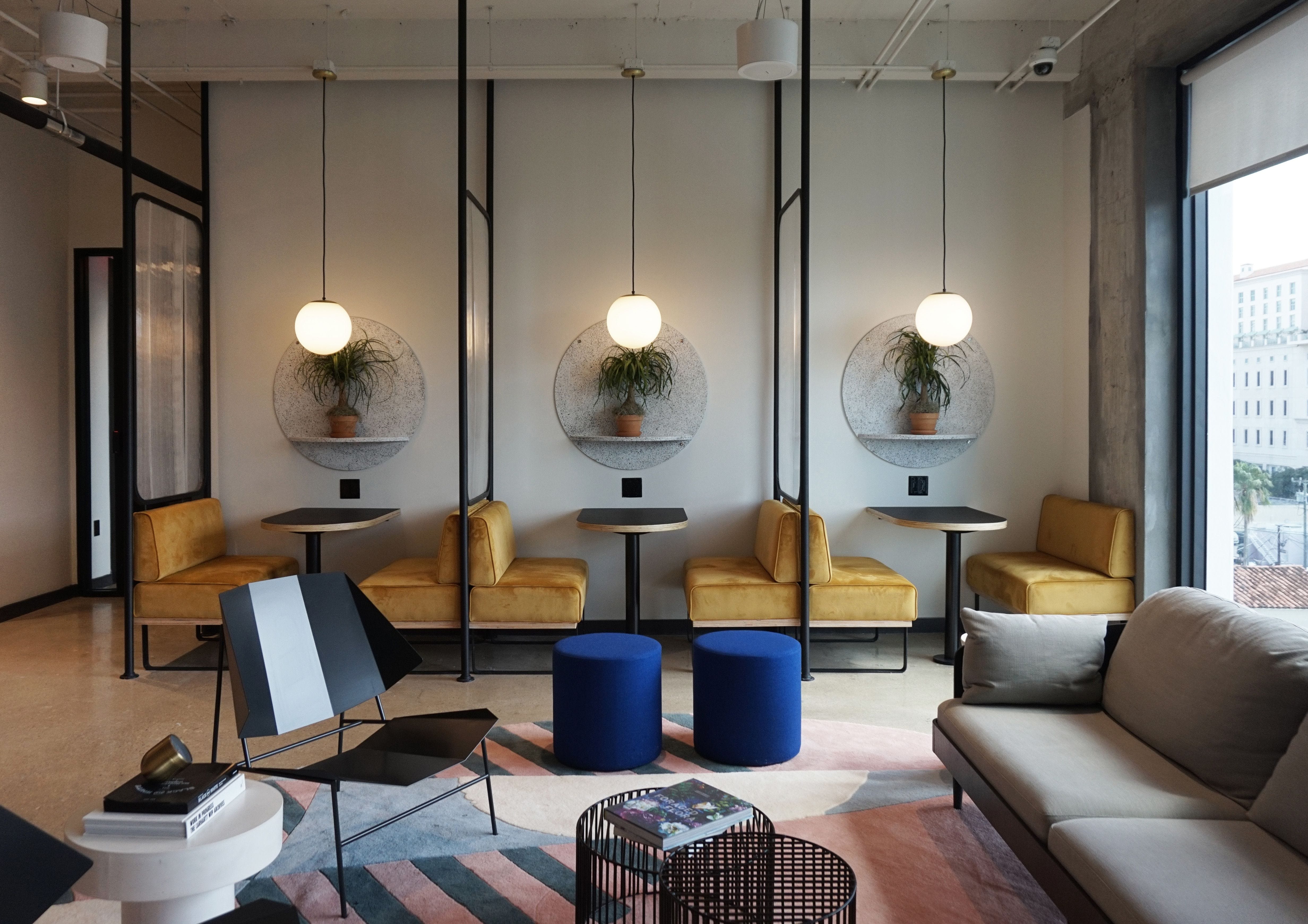
Deconstructing work into smaller tasks has many benefits for organisations and businesses. It allows more agility as smaller projects can be outsourced to specialised teams as needed and also provides the opportunity for internal cohesion and upskilling. When jobs are divided into smaller tasks current staff can potentially be more selective about the type of work they want to focus on. Think about your current role now and how it could be divided into smaller projects, tasks or elements. If you are a consultant, freelancer or business owner you might already have a very specialised focus but in the most simplified version it could be divided into operations, marketing and accounts.
You can think of workforce pixelation as a shift to prioritise specialist skills. Imagine a birds-eye view of our economies and then imagine zooming into an organisation, zooming in again to each unit/ division, each team, each individual employee and then zooming in again to the individual tasks and smaller pieces that make up the daily workloads. It’s like unwrapping job titles and professions and examining what spills out from inside; a close-up inspection of the smaller elements contained within a job title.
Coincidently, this is precisely the process that occurs when we begin to look at the world through the lense of the Human Design System. When we learn about our bodygraph we unwrap the layers and examine our inner mechanics; how we operate energetically and all the smaller parts that we’re made of. The 64 gates in Human Design, also viewed as the 64 Gene Keys, are inspred by the 64 hexagrams in the Chinese I’Ching which depict the archetypes of the human experience. These Gene Keys also correlate with the 64 codons in our DNA. Essentially, when we use the Human Design System as a tool for self awareness we are given the opportunity to explore our inner contents and the potentials we hold. This is the key to understanding what makes us distinctive and how we are designed to be a specialist of our own unique frequency.
The two themes that underpin all of these changes is the move towards independance and differentiation. Previously, when a person was hired by a company or organisation they remained with the employer, or at least in the field or industry, for long periods of time. Nowadays we are seeing less employer-loyalty as individuals have more choice and movement in their careers. Employers no longer have the authority or the power; they are no longer seen as the exclusive source of financial security. The rise of freelancing networks and gig-work sites allows independant contractors to bid for work in their specialisation and in response companies are more often outsourcing projects and specific tasks.
If you are familiar with the 19th Gene Key you will recognise the theme of transitioning from the shadow of co-dependance (placing authority on external agencies) to independance (meaning we recognise our own power and rely on ourselves) which offers us the gift of Sensitivity. At the higher frequency of the 19th Gene Key we elevate our focus beyond our own needs and as a result become more sensitive to others and our environment. This is reflected in the growth of the gig economy and the solo entrepreneur; we are witnessing individuals reclaim the power that we once outsourced to external employers who were considered to be the only source of work and employment security. That’s no longer the case and so, collectively we are taking that power back for ourselves, reshaping the dominant structure of labour exchange and demanding a new standard of value-aligned business.
Differentiation is also already showing up in the trends of encouraging flexible work arrangements and working schedules that cater for different styles, rythyms and personal situations. Individuals no longer feel satisfied with the 9-5 blanket-approach to work expectations. They want to feel like their work-life fits around their personal rhythms, their family responsibilities and the natural ebbs and flows of their energy. They want more input over the way they spend their time, the projects they focus on, the creations they bring to form and the spaces where they choose to express their creativity. Just like teachers are expected to differentiate learning experiences for the different learning styles of their students; organisations and businesses will also need to develop strategies that cater for our natural rhythms so that the priority is to create the conditions for each staff member to tap into their genius and access their highest potential, as opposed to the current profit-driven system which forcibly squeezes our potential out of us and leaves us depleted.
So how do we apply career differientation in a way that is both marketable and sustainable?

There are two steps to this process. Firstly, the work you do should align with your core values and involve activities, endeavours, interactions, expressions or creations that are supported by your sustainable energy. This means it does not require you to be something that you are not. If you have to filter, minimise or dilute yourself in any capacity at your workplace or in the work that you do, it is not sustainable and eventually you will be left feeling depleted, unfulfilled or stuck. You can identify where you have sustainable energy by looking at the activated channels in your bodygraph as well as your energy type, strategy and defined energy centres. Exploring your energy blueprint will help you map out the unique specialist that you are. It shouldn’t necassarily be a suprise- it might feel like wrapping your fingers around something you have always felt was there. A part of you will know it. Self awareness and understanding is important but the most important aspect is having the initiative to reach for it.
Using my own energetics as an example- as a 4/1 Projector with the channels of Judgement, Curiosity and Struggle I have sustainable energy for guiding others towards self-understanding and identifying how they might use their energy more efficently. The Channel of Judgement is attuned to focus on what can be corrected (brought into alignment) and intuitively see where systems are acting out of intergrity (unhealthy workplaces and toxic work cultures). The Channel of Curiosity carries the energy of sharing ideas in the form of stories and anecdotes that stimulate reflection and learning in others. And the Channel of Struggle carries the capacity to determine what is worth fighting for and the stubbornness to stand up for the things that hold meaning to me (equality and medical freedom in the workplace). All of these potentials are sustainable for me because I have consisitent access to these archetypal themes and the gift frequencies that they carry.
Secondly, there needs to be a collective need for what you offer. How can your insight, your expression, your opinions, your creations, your input, your teachings, collections, coordination or contribution serve the communities you are part of, or the wider collective? This is what makes your specialisation marketable. Not all of us are designed to focus our energy directly on the collective; depending on the circuitry in your bodygraph you might be dominant in either individual, tribal or collective circuitry. When you are using your energy correctly, you are contributing to the larger system at play, and in doing so this serves the collective. So we can all serve through our work in some way, however we will each take a different approach. For example, someone with individual circuity might be focused on their own tranformation and creation process- but sharing this empowers others through modelling their experience.
When we apply these two steps we identify our career differentiation. This is one way we can create a space of resonance for ourselves in the changing market of gig-work and a pixelated workforce. Even when we work with an employer we can still use this process to focus on the tasks or projects within our jobs that align with our natural energy. By investing time and focusing on honing the skills and experience required to master our specialist area, we can begin to secure ourselves as an expert and in the process, create coherence in our worklife.